
Preliminary study for the adequacy and implementation of a hydrogen laboratory
Última modificación 26 marzo, 2019
El Centro Nacional del Hidrógeno ha presentado el artículo titulado: “Preliminary study for the adequacy and implementation of a hydrogen laboratory” el cual ha sido aceptado por la revista International Journal of Hydrogen Energy.
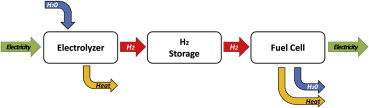
Este artículo desarrollado por Beatriz Nieto, Gonzalo Manjavacas, Carlos Merino y Rubén Quintana, todos ellos investigadores del CNH2, muestra el diseño conceptual y la ejecución de los trabajos necesarios para la construcción de un emplazamiento en el que operar de forma segura electrolizadores y pilas de combustible dentro de un proyecto de investigación en el que participa el Centro Nacional del Hidrógeno.
A continuación se muestra un resumen del artículo:
Hydrogen, within the so called Hydrogen Economy, has the potential to become the energy carrier of the future which could change entirely the energy industry. It could help to change to a more reliable, efficient and environmentally friendly energy sector.
Hydrogen Economy is based on different technologies which are related to the scientific and industrial sectors. Thus, all equipment included within hydrogen technologies are in an experimental stage or in a too early market, safety being one of the research lines followed in the design and use of these equipment and devices. This paper includes the design and implementation of different building works to have a place to operate in a safe way electrolyzers and fuel cell systems that belong to a research project in which Centro Nacional del Hidrógeno (CNH2) is taking part in its current facilities.
Because of working with hydrogen, the whole design was considered from the point of view of the potential to generate explosive atmospheres.
Parte de los trabajos descritos en este estudio han sido realizados con la financiación aportada por el proyecto GEBE (IPT-120000-2010-011), en el que las entidades financiadoras han sido el Ministerio de Ciencia e Innovación (MICINN) y la Unión Europea a través del Fondo Europeo de Desarrollo Regional (FEDER).
Más información: Science Direct

