
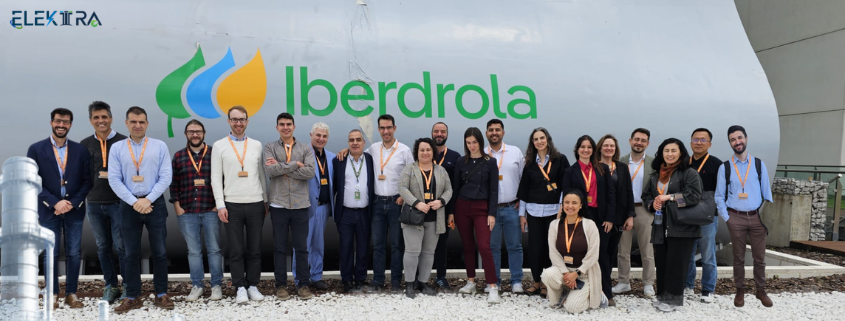
ELEKTRA project launched to advance electrified technologies for low-carbon steelmaking
The ELEKTRA project, Advanced Electrification of Key Industrial Reactions, has been launched to accelerate the decarbonisation of steelmaking through a new generation of electrified reactor technologies.
Steel is one of the most carbon-intensive industrial sectors and remains heavily dependent on fossil fuels for high-temperature processes and reducing gas production. ELEKTRA addresses this challenge by replacing conventional fired, heat-driven reactor units with compact, efficient and flexible electrified alternatives powered by renewable electricity.
The project will develop and demonstrate three innovative reactor technologies for ironmaking. The first is a Joule-heated electrified reformer for natural gas and direct reduced iron top gas, designed to produce cleaner syngas while eliminating combustionrelated CO₂ emissions. The second is an induction-heated ammonia cracker, which will produce high-purity hydrogen from green ammonia for hydrogen-based direct reduction and blast furnace applications. The third is a plasma-assisted CO₂ recycling reactor, which will convert process CO₂ into reusable CO, creating a circular carbon loop within the steel plant.
Together, these technologies target major reductions in energy demand and CO₂ emissions across both existing blast furnace routes and future hydrogen-based steelmaking. ELEKTRA aims to demonstrate the electrified reformer and ammonia cracker at TRL7, and the plasma CO₂ recycling system at TRL6, creating a pathway toward industrial deployment and scale-up.
“ELEKTRA brings together electrification, hydrogen carriers and carbon recycling to address some of the most difficult challenges in steel decarbonisation,” said Dr. Carlos Funez, Iberdrola. “By demonstrating these technologies under industrially relevant conditions, the project will provide practical solutions for cleaner and more resilient European industry.”
The consortium brings together partners from across the full value chain, including energy suppliers, green ammonia producers, gas infrastructure operators, technology developers, engineering companies, research organisations and steel industry end users. This integrated approach ensures that the project addresses not only technological performance, but also safety, sustainability, techno-economic viability, life-cycle impact and future exploitation.
Beyond steel, ELEKTRA’s technologies may also contribute to the decarbonisation of other hard-to-abate sectors such as chemicals, refining, cement, glass and ceramics, where hightemperature processes are still largely powered by fossil fuels.
By combining renewable electricity, clean hydrogen pathways and carbon circularity, ELEKTRA will contribute to Europe’s climate objectives, industrial competitiveness and leadership in clean manufacturing.
About ELEKTRA
ELEKTRA, Advanced Electrification of Key Industrial Reactions, is a collaborative European project focused on developing and demonstrating electrified reactor technologies for lowcarbon ironmaking.
The project targets energy efficiency, CO₂ reduction, renewable electricity integration and circular use of process carbon in steel production.
A 13Meuro project funded by the European Commission, with 15 European partners:
- IBERDROLA,
- Tecnalia Research & Innovation,
- SYPOX,
- H2SITE,
- Johnson Matthey,
- The University of Manchester,
- Fertiberia Corporate & Fertiberia SA,
- CNH2,
- MODELTA,
- 1CUBE,
- SNAM,
- Empresarios Agrupados
- Arcelor Mittal Innovacion Investigacion e Inversion,
- ZEFIRA
Project funded by the European Union (grant agreement No 101294850, ELEKTRA project). The opinions and views expressed are solely those of the authors and do not necessarily reflect those of the European Union. Neither the European Union nor HaDEA can be held responsible for them.
Further information about the project is available at www.elektraproject.eu.
